Thursday, July 29, 2010

Books for Everyone?


Today our explorations took us to the British Library.
How the library is set up is very interesting. Anyone can come into the library, but to be able to look at a book, you must register with reader services. You must provide two forms of ID that include proof of address and signature, no copies are allowed and there are NO exceptions. You must also state the nature of your research. The majority of the users are doing academic research (68%). None of the collections are browsable, and there are 186 miles of shelving in the basement for storing the majority of the collections. These materials have to be requested and pulled for you, so you need to use their catalogue and determine what you need before you come in. All publishers must submit one copy of everything they publish, and according to our guide, the library will "hold it in trust for the nation". There is no censorship and they claim to have the most historical collection in the world.

This new library was opened by Queen Elizabeth in June 1998. Arts and Humanities are located on one side of the building and sciences on the other. The humanities and rare books areas have the largest reading rooms, and almost always have an occupancy rate of 96-98%. The rooms are available on a first come first serve basis, and once they are full no one else can come in. There is no limit to the amount of time you can spend in the room, so some researchers are there all day.


The library is also home to the King's Library of George III, which is a working collection of over 60,000 items. There are no plans to digitize this collection, because according to our guide it would take one thousand years.


One of the most interesting parts of the library was the Sir John Ritblat Gallery which houses the Treasures of the British Library. Original writings from literary greats, illustrations, religious sacred texts, one of the four remaining copies of the Magna Carta, and Beatles lyrics. A page in a notebook with the conclusion to Charlotte Bronte's Jane Eyre: "Readers - I married him. A quiet wedding we had." Also impressive were the number of artists who had illustrated Lewis Carroll's Alice in Wonderland. Salvador Dali's surreal interpretation and the black and white drawings by Marketa Prachaticka both gave you a different feeling for the story.

In the front entrance of the library there is a book sculpture titled "Sitting on History". It is an open book with a ball and chain, contrasting the availability and suppression of knowledge. The British Library is safeguarding the world's knowledge.


Steps at the British Library

Our photography focus today had been on smaller things, details.


Detail from what appeared to be a large abstract painting

Wednesday, July 28, 2010

Tuesday, July 27, 2010

Architecture and Angle

We were given a lovely tour of St. Paul's Cathedral today by a gentleman named John Wilson. Designed by the architect Christopher Wren, the "People's Cathedral" was about balance, symmetry and beauty. There was some initial controversy over whether it should have a dome or a spire (believed to carry prayers to heaven), but Wren's design of an inner and outer dome prevailed.

The previous St. Paul's Cathedral, with a spire, was demolished in the Great Fire of London in 1666. Wren built St. Paul's in thirty-five years, and also designed and rebuilt fifty-one other churches that were destroyed in the fire.

John pointed out that the cathedral had gone through a complete cleaning and restoration between 2001-2004. A portion of the unrestored interior wall has kept been so that you can see the dramatic contrast.

We were also shown the entrance doors, now just used for special royal occasions, made out of solid English oak and weighing two tons each.


Wren preferred to have clear glass in the windows to let the light shine in.


Unfortunately, it is not possible to take pictures in the cathedral so all my photos are from outside. Our focus was to think about composing our picture differently, a change in angle, off center, lighting. I was not too successful with this one I'm afraid, but here are a couple of attempts at being (slightly) different.


Feed the Birds

You are actually not allowed to feed the birds, and no one is selling breadcrumbs for tuppence a bag, so it takes a stretch of the imagination to conjure up Mary Poppins.
An Angel

Monday, July 26, 2010

The Gardens at Hampton Court Palace


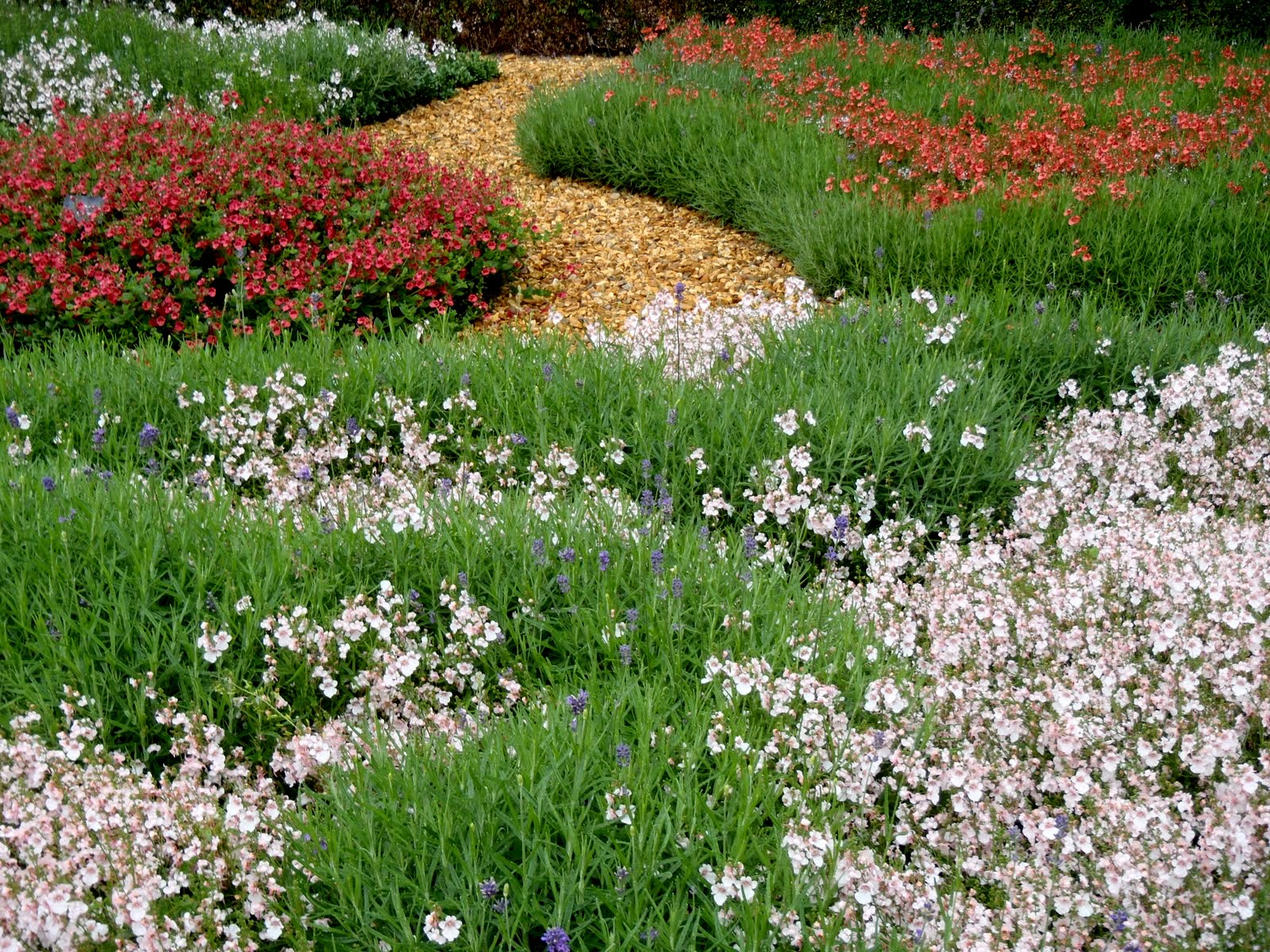
Hampton Court Palace, home to Cardinal Wolsey, Archbishop of York, and later to King Henry VIII, is surrounded by gardens. I found them to be the biggest draw of the place, perhaps because they provided such an enticing viewpoint to look back at the palace. Many of the gardens were designed by Christopher Wren, who was hired by William and Mary in the 1690's to expand the palace.

The Privy Gardens
The Pond Gardens
The Knot Garden
Most of the gardens seemed to have a symmetrical, formal style, but occasionally you would come across one  with a meandering flow. 


And what garden is complete without the requisite statue?


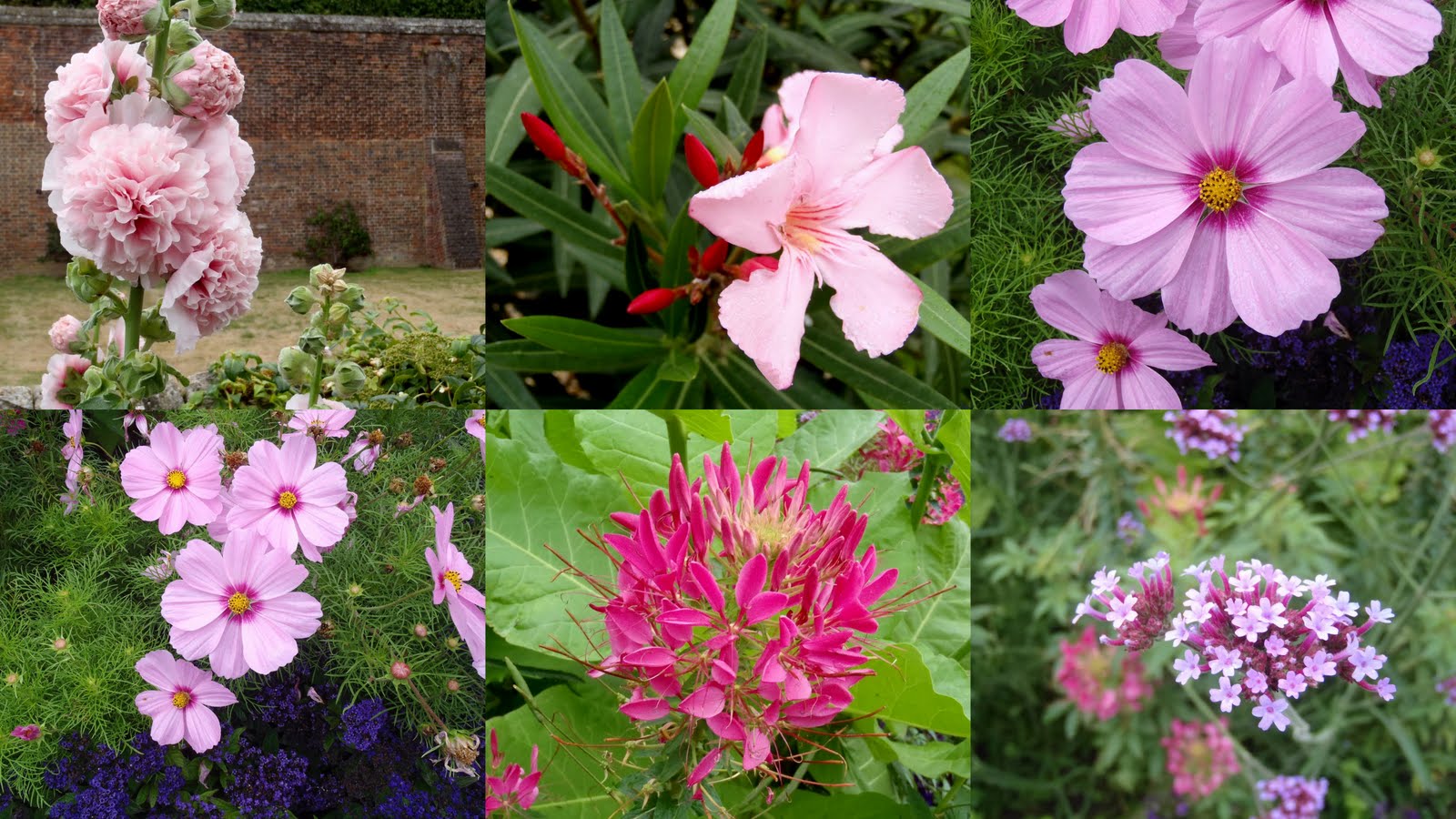
Our photography focus today was on detailed views of flowers. We had already experimented with this when we visited the Queen Mary's Gardens at Regent's Park, which was filled with roses. Under today's gray sky the color of the various flowers seemed to shine more brightly.

Perfect Pinks
Yellows and Blues
Palace Wall - Great Fountain Garden


Clock Court
 And one last look at the palace.....


Swan Near the Fountain Garden

Sunday, July 25, 2010

The Tube


The iconic roundel symbolizing the London Underground was designed by typographer Edward Johnston and has been in use since 1918. Above ground the words on the blue bar simply state UNDERGROUND. Once you are underground the names of the stations will be listed on the blue bar instead.

The second enduring design feature is the diagrammatic underground map, created by Harry Beck in 1931. "Basing his map on an electrical circuit, Beck represented each line in a different colour and interchange stations as diamonds. The crowded central area was enlarged for legibility and the course of each route was simplified into the form of a vertical, horizontal or diagonal. The diagrammatic map was produced on a trial basis in 1933 as a leaflet and Beck continued to refine it until 1959. His design has inspired the maps of underground networks from New York to Sydney, and a variation of his original design is still used by London Underground today." http://designmuseum.org/design/london-transport  Tube Map
Operating 11 lines covering 249 miles and carrying over 1 billion passengers each year has taken a toll on the aging 140 year old system. The network is currently undergoing a complete renovation, expected to take approximately ten years. Find out more under Transforming the Tube.

While the renovation is is progress, service updates are available at your station, online at Transport for London, and you can receive advance warnings of weekend closures by email.


There are signs throughout the stations that direct you to the correct line, or help you find your way out.


You will be cautioned to "MIND THE GAP" between the platform and the train. This will also be stated aloud as the tube pulls into a station.


Train Speeding out of the Station

Charing Cross Station on the Northern and Bakerloo Lines
Many of the stations have unique designs and artwork on the walls.


Closest Station to Florida State London Study Centre

Marble Arch Station on the Central Line
Classic Design on White Subway Tiles

The London underground is an historic engineering feat and it continues to evolve to meet the needs of today's passengers.


 Mosaics at the Tottenham Court Road Station


I would like to offer you my own "Ten Tips for Tourists Taking the Tube".
Music by The Down and Outs. Heard of Ellephants. Market Music. Released April 8, 2009.

www.creativecommons.org


Friday, July 23, 2010

The Royal Parks

London has 5,000 acres of historic parkland spread throughout the city. Each park has it's own attractions, but they all offer a peaceful retreat from the clamor of the urban city. The eight parks together are known as the Royal Parks. Today our outing took us to The Regent's Park, which covers 410 acres and houses the Queen Mary's Gardens with over 400 varieties of  roses. Our photography focus for today was panoramas, but with so many roses at our fingertips we could not resist taking close-ups as well.
Southeast Entrance to Regent's Park
A Collage of Roses from Queen Mary's Gardens
A Perfect Pink Rose

The Regent's Park includes Primrose Hill, which offers an expansive view of the city in the distance, and is famous for being the setting for Mary Poppins "Let's Go Fly a Kite".

Cricket and Soccer at Regent's Park


The Regent's Park has nearly 100 acres designated for sports activities.


Buckingham Palace
During this past week we also visited St. James Park and Greenwich Park. St. James Park is bordered by Buckingham Palace and the mall, where tourists flock to see the changing of the guard.


Changing of the Guard proceeding down the Mall
View from the top of the hill by the Royal Observatory
Greenwich Park is home to the Prime Meridian Line and Royal Observatory which we visited on Thursday,  July 22. Nearby is the National Maritime Museum, which had a fascinating exhibit called Atlantic Worlds.